Sports Audiences Are Changing
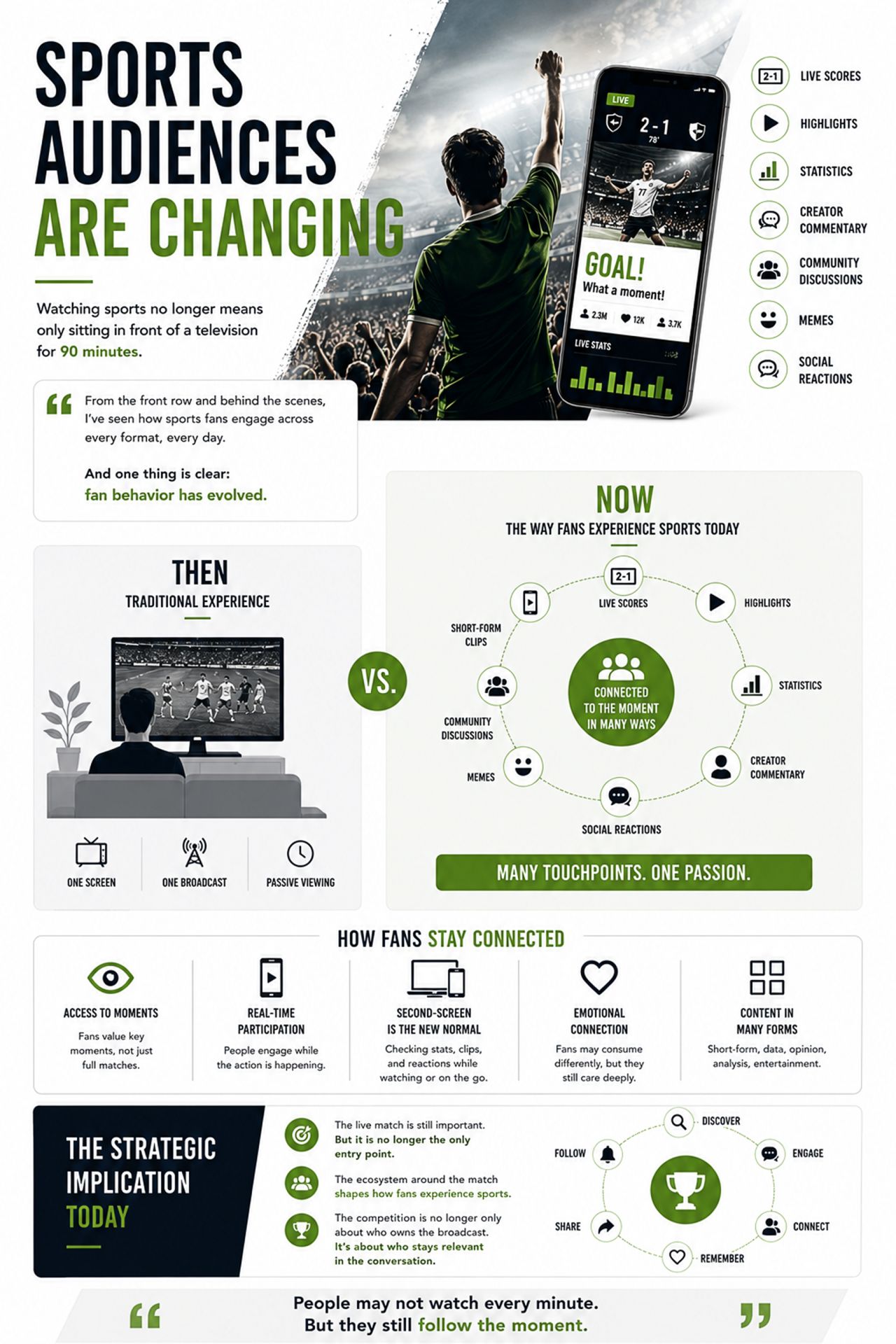
One thing I’ve been thinking about lately, especially with conversations around major sports rights and global tournaments, is how much sports audience behavior has evolved over the years.
Watching sports no longer means only sitting in front of a television for 90 minutes.
Today, many fans experience sports through an ecosystem of moments.
Some people still watch full matches.
But many others remain connected to the tournament through:
• live scores
• highlights
• creator commentary
• short-form clips
• statistics
• memes
• community discussions
• social reactions
• real-time conversations across platforms
And honestly, working more closely in sports media over the past few years has made this shift much clearer to me.
Especially after having the opportunity to work within a platform ecosystem like TrueID, where sports audiences engage with content across many different formats and behaviors throughout the day.
What becomes interesting is that sports fans today are no longer interacting with only one type of experience.
Some audiences still prioritise live broadcasts.
Others follow through highlights, creators, statistics, social conversations, or short-form content.
Many move fluidly across all of them.
And I think this is an important point in today’s sports ecosystem:
Not watching the full live match no longer means people are disconnected from the sport itself.
In many cases, they are still highly engaged emotionally throughout the tournament.
They follow the goals.
The drama.
The reactions.
The debates.
The momentum surrounding the event itself.
What’s changing is not passion for sports.
It’s the way audiences stay connected to the moment.
The live match is still important.
But it is no longer the only entry point into sports engagement anymore.
That shift changes how platforms, creators, broadcasters, and media ecosystems think about sports audiences today.